
The biophilia hypothesis suggests that humans possess an innate tendency to seek connections with nature and other forms of life. Edward O. Wilson defines biophilia as “the urge to affiliate with other forms of life”. As businesses are changing to accommodate new ways of working, they are also focusing more on wellbeing. “We have slowly come to realise that people spend more time awake in the office than they often do in their homes,” says Matthew Kobylar, director of interiors and workplace strategy at Arney Fender Katsalidis, an architecture firm. “So the question is, how can work be more nurturing?” Answering that question will improve your employees’ performance. In 2015, researchers at Harvard found that people who work in offices with high levels of natural light, ventilation and exposure to greenery, were better at responding to crises, thinking strategically and managing information than those in conventional spaces. [caption id=“attachment_18” align=“alignnone” width=“1000”]
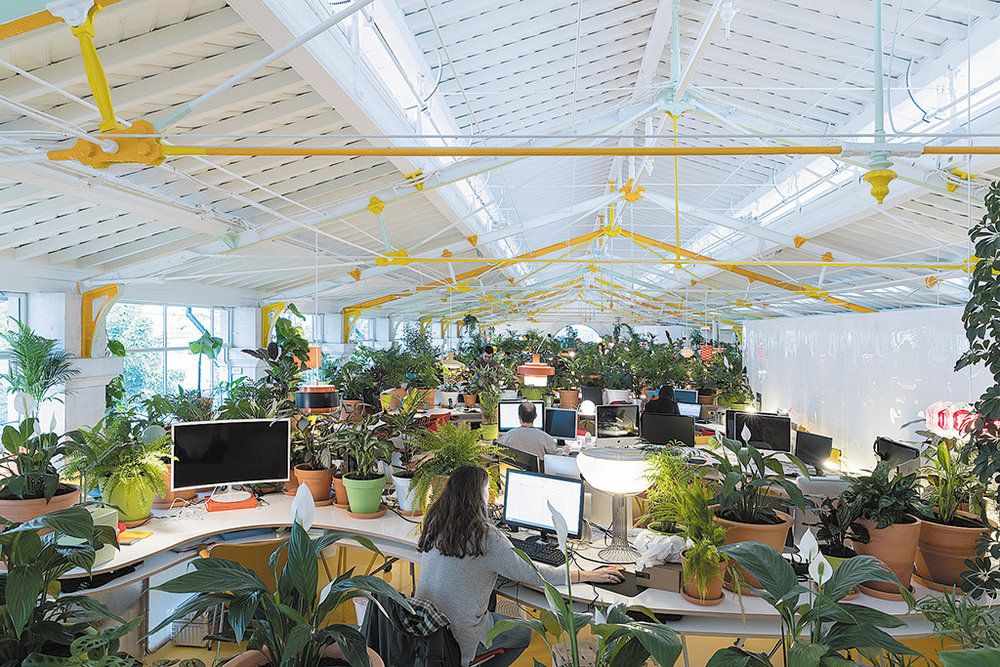
‘Going green’ - The pot plants at Second Home in Lisbon[/caption] The answer is two-fold. First, office designers are introducing home comforts. At the offices it has designed for companies like Nike and Cisco, Studio O+A in San Francisco has introduced domestic touches like planters and vintage leather chests, and focused on natural materials like exposed wood. Secondly, there’s an increasing interest in “biophilic” office design – incorporating nature into the workplace. Among the most alluring expressions is at Second Home in Lisbon, a co-working space designed by SelgasCano, a Spanish studio. Every chair and lamp is different – after all, no two natural objects are identical – and it contains around 1,000 pot plants.